
The Wall Street Journal | Page A001Tuesday, 10 June 2025
They Travel the World In Search of License Plates
BY ROBERT P. WALZER
Collectors cross the globe for rare finds, from diplomatic tags to the devilish 666
Some people dream of scaling a peak or writing a novel. Ethan Craft wants to collect at least one license plate from 500 global jurisdictions.
The quest has taken the 27year-old across the world in search of junkyards, antique stores and other collectors willing to trade plates.
It also nearly killed him.
The Phoenix native and freelance journalist was recently driving through South Africa’s rural Eastern Cape in a rickety Renault Kwid hatchback when he swerved to avoid debris, slammed into a rock wall and flipped over. Craft avoided major injury. As important, he was able to recover the dozens of plates that spilled onto the road—along with the tag on his rental car.
“I’m going to save that one for my will,” said Craft.
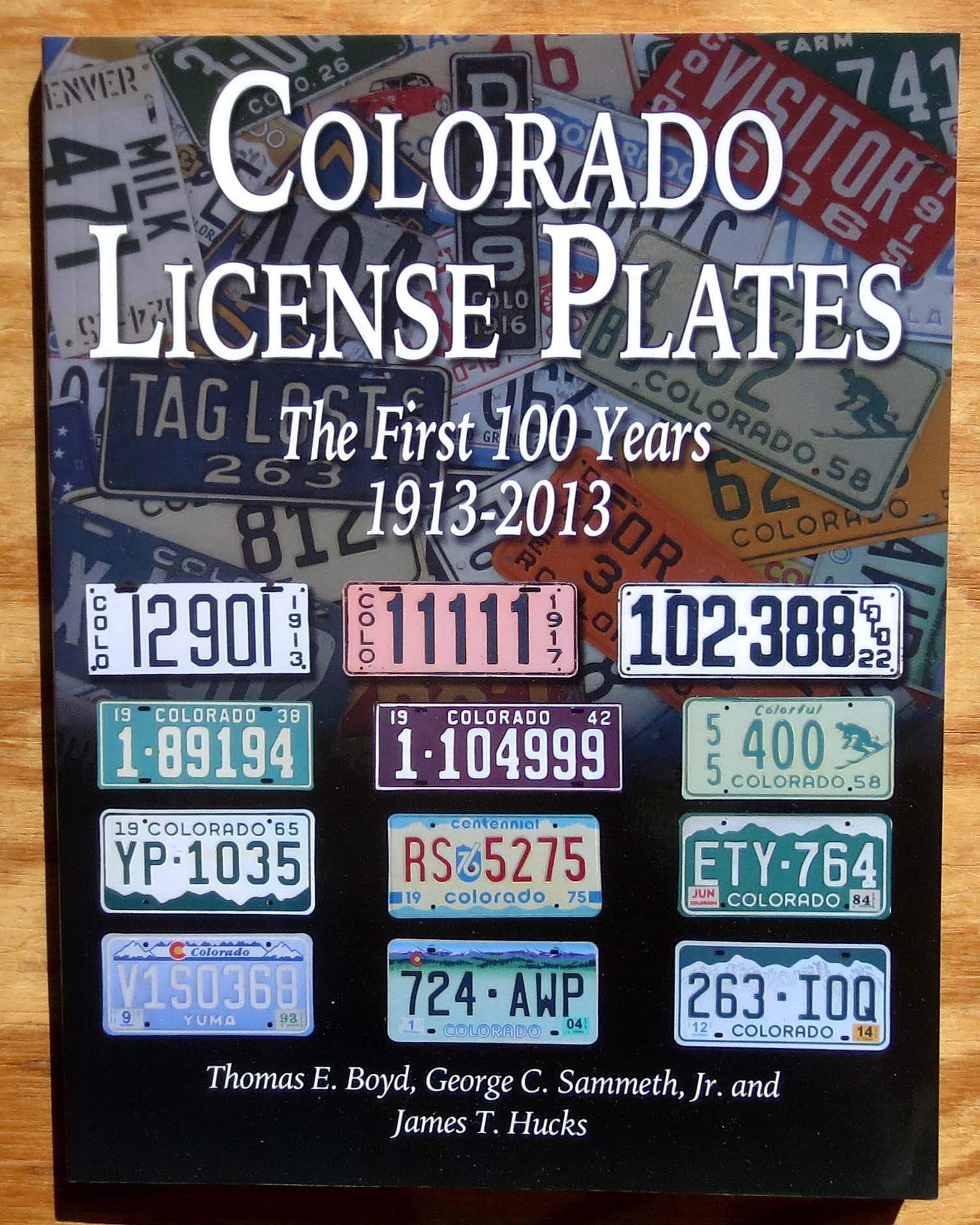
Stamp collectors are called philatelists. People who save coins are numismatists. License plate collecting is so arcane that there isn’t a word for it. But there are thousands of people who so covet tags that they are willing to travel to remote corners of the globe— sometimes at great expense and personal risk—to score a rare find. Some collectors focus on geographic regions. Others target tags based on design or color. Numbers are big draws, too, namely low ones, birth dates, the devilish 666 and the code for marijuana, 420. Some seek out diplomatic tags or presidential inaugural ones. Others pursue early porcelain plates or those from countries at war.
Tags from Vatican City are
a holy grail for plate collectors. For enthusiasts of early American plates, it doesn’t get much better than a 1921 Alaska tag, one of which is rumored to have changed hands for $60,000.
There is a market for humorous plates that call to mind the “Assman” tag meant for a proctologist that instead went to Kramer in an episode of “Seinfeld.” In Maine, where vulgar plates were outlawed in 2021, bidding wars erupt when a good one comes up for sale.
The Super Bowl of plate collecting takes place in July at the annual convention of the 3,000-member Automobile License Plate Collectors Association.
Craft’s obsession began at age four on road trips with his dad, peering out the back seat window to see how many different state tags he could identify. He later used a dis-posable camera to shoot out-of-state plates at the airport and malls, collecting them in a scrap book. Craft’s parents took note. “One year, the tooth fairy left me a license plate instead of a couple of bucks,” he said.
Craft memorialized his South Africa mishap on his TikTok account, where he treats his 526,000 followers to lessons on why European plates have no mounting holes, the historical differences between tags from Zimbabwe and Zambia and what features reveal a Sri Lankan plate’s age.
Craft has traveled to about 70 countries, collecting plates from 181 of the 193 U.N. member nations and about 400 global jurisdictions. He has about 2,000 plates in his core collection and another few thousand for trading.
He isn’t the only extreme plate collector.
During his four-decade collecting career, Dave Stratton has gone to extraordinary lengths to acquire rare tags. Stratton, 74, a retired international flight crew scheduler at FedEx who lives in Mississippi, at one time was enthralled by plates from tiny, hard-to-reach islands in the Bahamas. A pilot friend with a homemade single-engine aircraft made him an offer.
“He said, ‘I’ve got this plane,’” Stratton said. “If you buy the gas, I’ll fly it. I thought he was joking at first but over the course of two years planning it got more serious.”
The duo eventually flew 1,300 miles in a Bushby Mustang II twoseater aircraft from Olive Branch, Miss., to Mayaguana, Bahamas, population 208. They braved thunderstorms, narrow dirt runways and rocky Caribbean bureaucracy over the four-day journey there and back. “Thank goodness for fax machines,” Stratton blogged after the 2001 trip.
Larry Luxner, a Florida-born freelance journalist based in Israel, has been acquiring plates since the age of 5. In 1994, he was driving in Nicaragua on a highway between Managua and Matagalpa when he came upon the aftermath of a head-on collision. The car’s front was totaled, but the back was preserved.
“So I asked the policeman there if I could take the plate because I’m a collector,” Luxner said. “He produced a screwdriver and handed it to me.”
Luxner still esteems the plate in his nearly 700-piece collection—“Nicaragua Libre MV 1899.”
Bernt Larsson, an 89-year-old Swedish economist who lives in Barcelona, said his 1,000-plate collection began in 1952 with a letter to the AAA from Stockholm.
“I received a very kind letter from the secretary with a license plate from D.C. with a very low number, 1087,” said Larsson, who was first inspired to collect by his father, a member of the Royal Automobile Club of Sweden. “I thought, ‘how nice.’” Larsson followed that up with letters to other countries. He got a surprising response from police authorities in Asunción, Paraguay, in 1960 when the country was under a military dictatorship.
“They sent me 10 or 12 plates from cars, trucks, from a bus, and then sent me a telegram telling me they had mailed the plates. I was so happy,” said Larsson.
Craft is trying to persuade two friends to travel with him to locations with rare plates such as Nunavut in Canada’s northern Arctic region. His pitch: They can sell tags they acquire to fund the trip’s cost.
“They said, ‘How about we go to Miami? Or England?’ I said, ‘How about Nunavut? Or Turks & Caicos? Or Anguilla?’” he said. “We’re in that stage now of making the math work.”
 Buy the "
 Download a free copy of Tom's book "